SignItNow - an electronic signature service on the blockchain
SignItNow collects signatures from several parties on a single document and records the result on the blockchain. The service grew out of preparing an advertising campaign for a neighbouring product - and turned out to matter more than the campaign itself.
- Client
- Ubix.Network
- Industry
- Blockchain, Fintech
- Services
- MVP development, Web3 and blockchain, Frontend, Backend, Design, On-Line services, Outstaff, Web development, Analytics, Web3 experience, Business consulting
- Period
- 2021-2025
A service nobody planned
It started with advertising. The ecosystem had a blockchain notarisation service - popular, with a base of users behind it. A targeted campaign was being prepared for it, aimed at business: entrepreneurs and companies were to be told that all sorts of documents can be notarised, signed ones included - contracts, agreements, acts. The same approach was then meant to be applied to other niches: a separate product was in the works for music and media, for instance.
Strategy was handled by the client's marketing director; the technical side was ours: design, markup, landing pages, end-to-end analytics and reporting on campaign performance for the owners.
Before writing the value proposition we ran customer development - with the very audience the campaign was aimed at: entrepreneurs and company representatives. That is where it emerged that notarising a signed contract and signing a contract are, for them, quite different things. They were coming for the second one.
SignItNow - a decentralised electronic signing service
Notarising and signing are different tasks
Notarisation answers the question "this file existed and it is mine". A hash is enough: a person notarises their own document, and no second participant is needed.
Signing works differently. Here every party has to take part explicitly: each must see the document, agree and leave a signature, and the result has to prove the involvement of all signatories, not just the author of the file. A hash alone will not do that.
What remained was to decide where to build it. Fitting someone else's logic into a working service means redoing the interface and rebuilding the backend - microsurgery inside a settled system with many connections. We proposed another way.
An MVP instead of a rebuild
Testing a hypothesis inside a working service is expensive: any change touches what already brings in money, and every fix goes through regression. A separate MVP costs almost an order of magnitude less - and, more importantly, arrives sooner: it can be built, put in front of an audience and answered by the market while the rebuild is still being planned.
That is what we did. SignItNow started as an MVP: a minimum of features but the full scenario - upload a document, assign signatories, collect the signatures, receive the certificate. The response was strong enough to keep going, and from there the service grew on live users.
An add-on, not a second blockchain
SignItNow notarises nothing itself. The root node of notarisation is Silent Notary, and it is the one that writes to the blockchain. SignItNow works on top of it through an API: it collects the document, the participants and the signatures, hands the finished package over for notarisation and receives the result back.
The split saved months. Storage, work with the registry and the issuing of certificates were already built and proven - what remained was to construct the one thing that was genuinely missing: signing by several parties.
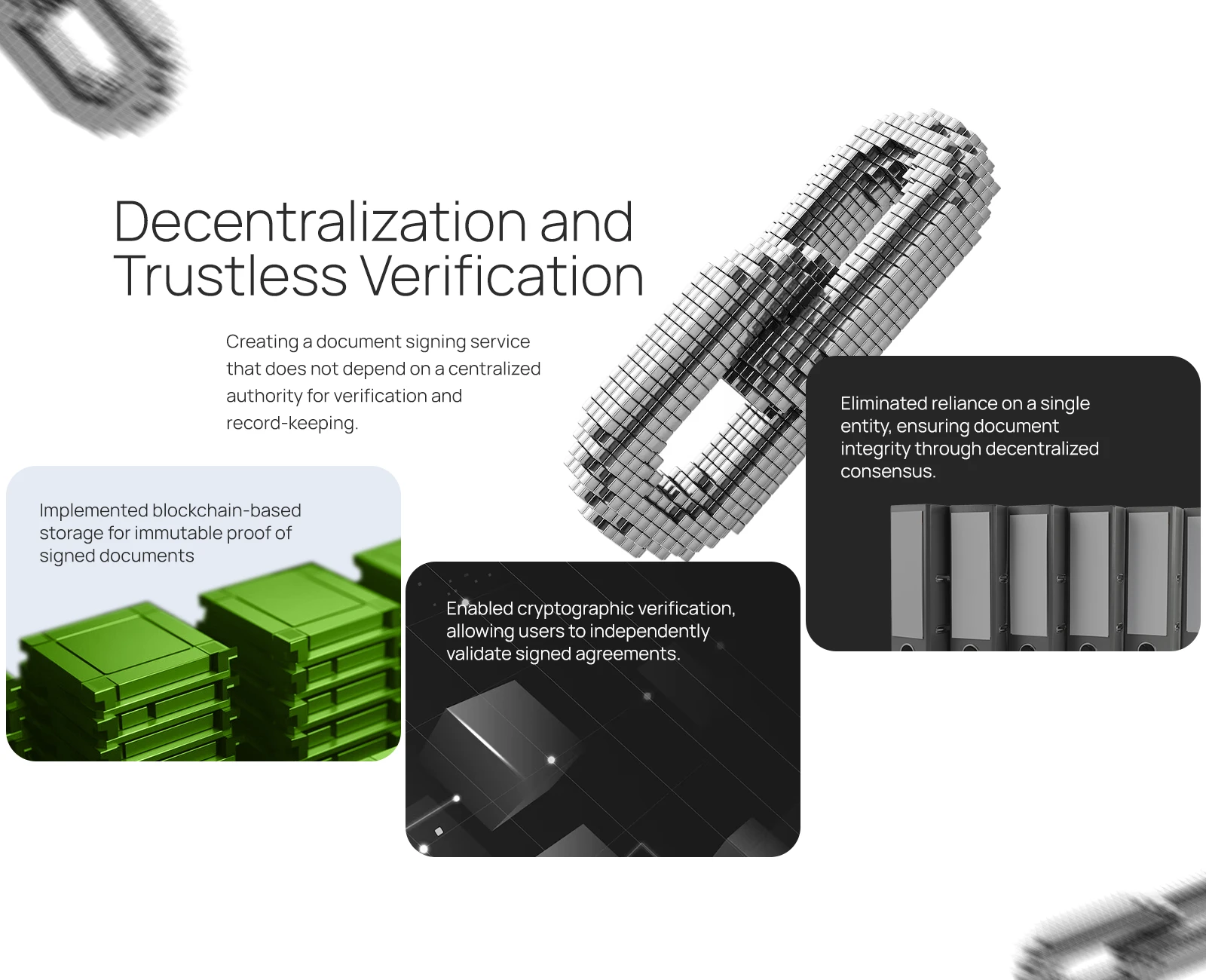
Decentralisation and verification of signed documents without the need for trust
How signing works
The sender uploads a document and enters the emails of those who need to sign it: there can be two signatories or more. The first signatory is the sender.
Next comes the visual builder: they place the signature fields across the document, their own and everyone else's. The service saves the document together with that layout and sends the participants their emails.
Two and more
The number of signatories on a single document is not limited.
Field builder
Signature fields are placed across the page, one for each participant.
By mouse or finger
With a cursor on a computer, straight on the screen on a phone.
Batch sending
One document for everyone, or a separate document with each counterparty.
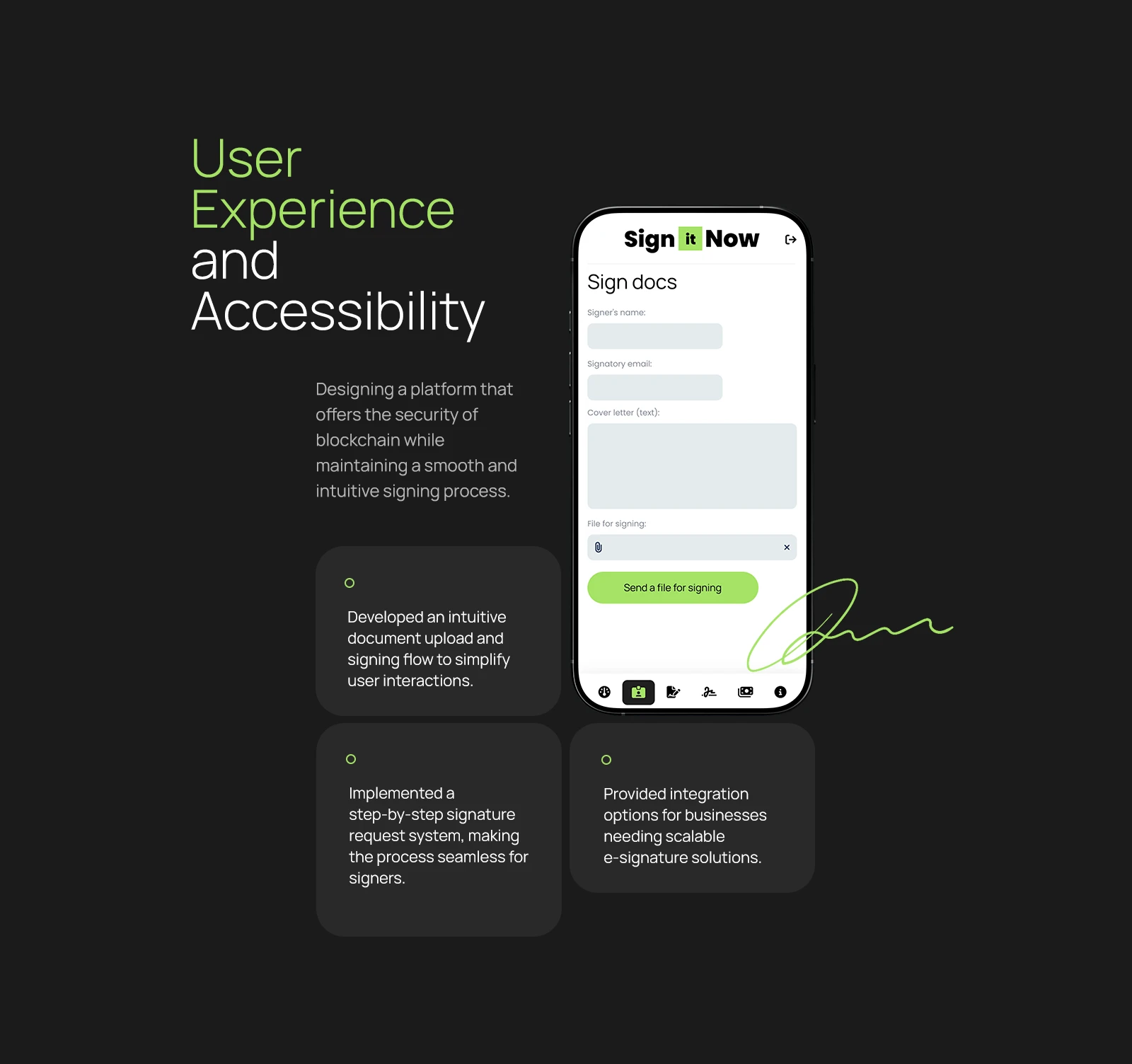
User experience and accessibility: signing documents from a phone
A signatory needs no account
We did not invent this mechanism from scratch - it had already been proven in the notarisation service, and we carried it over ready-made.
The recipient of the email follows a temporary link, enters their address and receives a one-time code. That entry is the registration: there is no password to invent and no address to confirm. The person sees the document straight away, along with the fields where their signatures will go, and signs with a mouse or a finger.
The email with the signed document carried a note: follow this link and the account stays yours, and you can send documents for signing yourself. That is how the second party became a user without ever meeting a registration form.
Control and statuses
While signatures are being collected, the sender sees the whole picture: who received the document, who has already signed, who needs a nudge. In effect it is document handling arranged like a CRM: not a folder of files but a process with statuses.
For a company with a stream of contracts this is the actual work. Notarising a track or a manuscript is one thing; running dozens of signings at once is quite another.
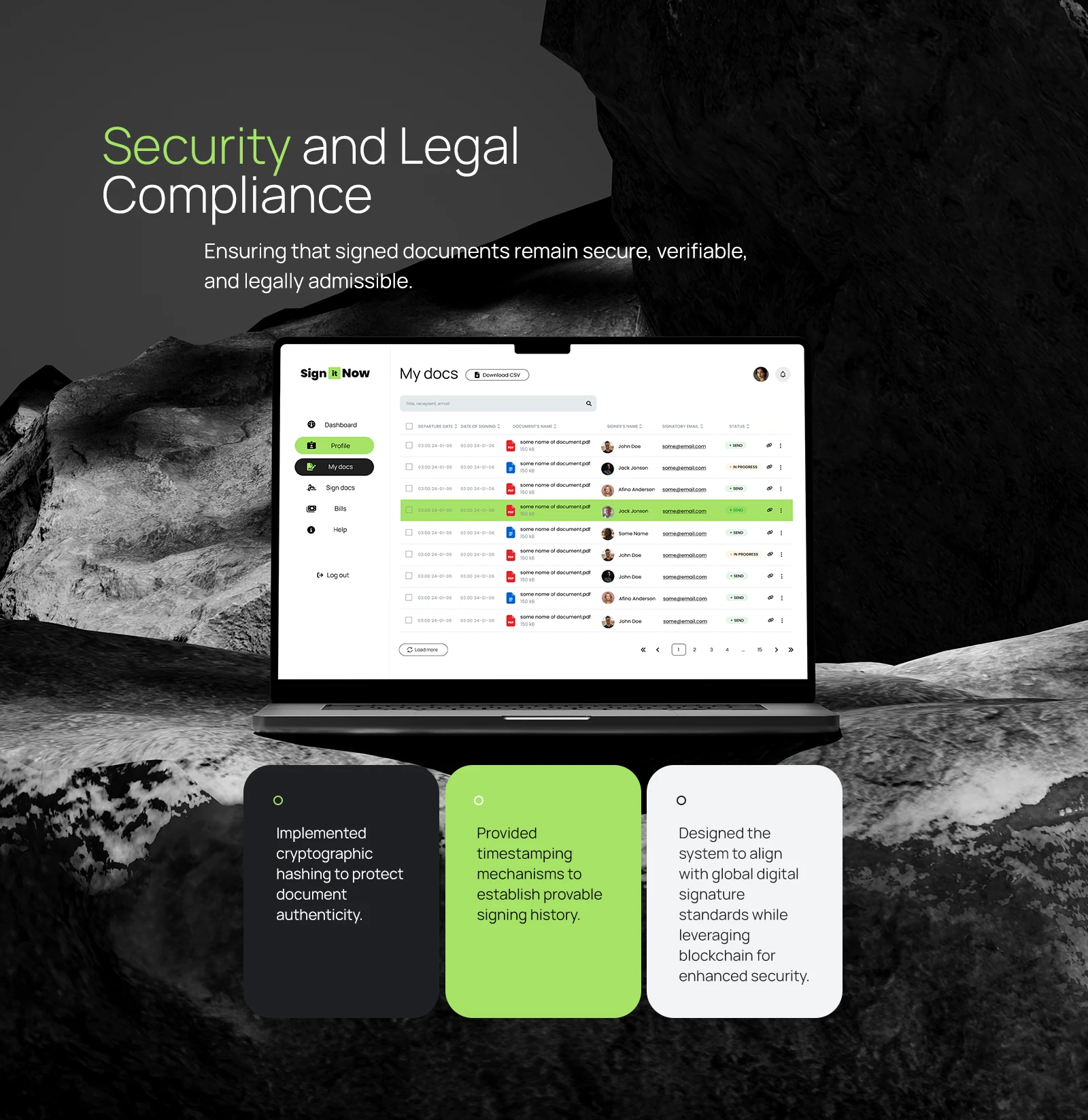
Security and legal compliance: a list of documents with signing statuses
The certificate
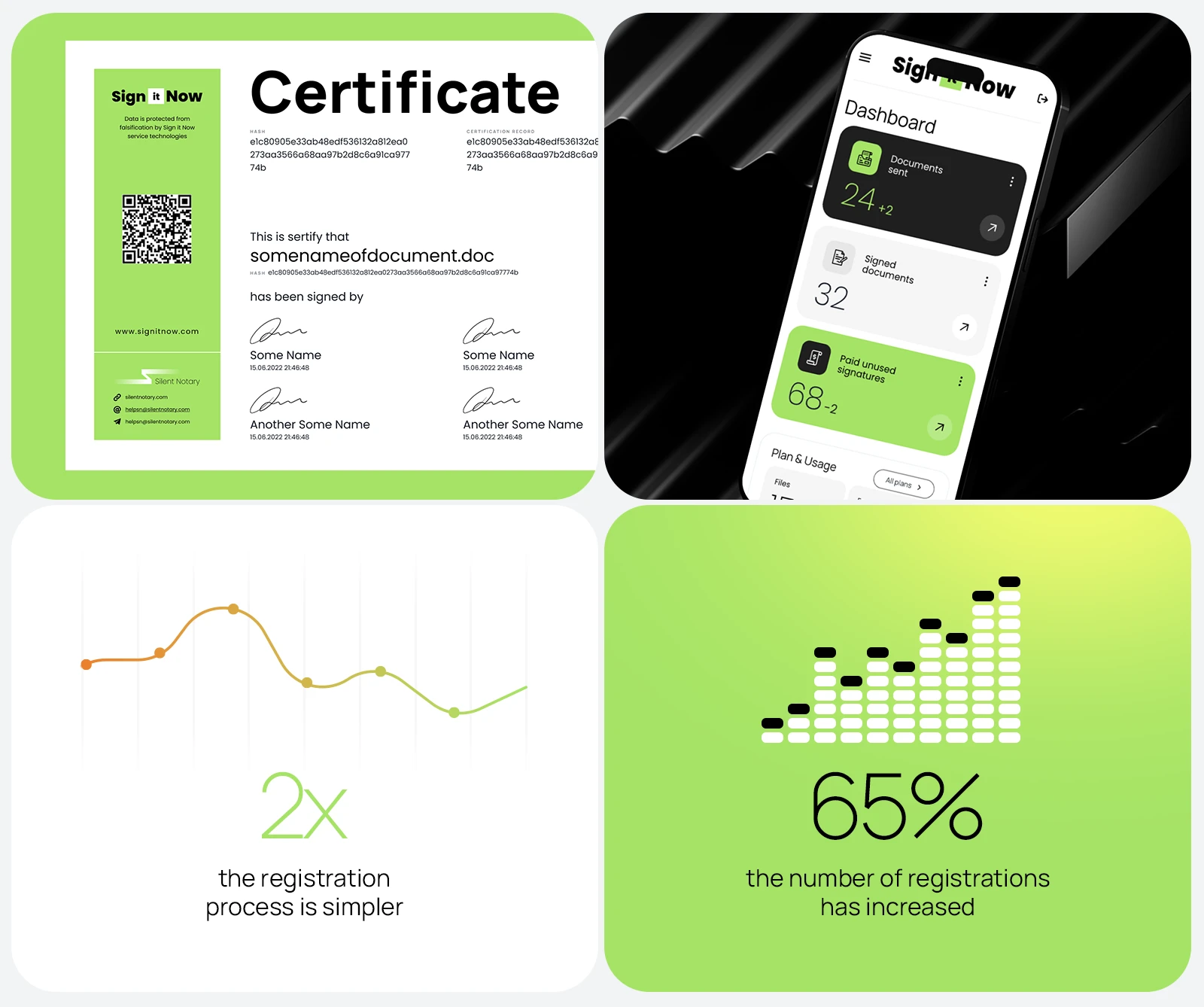
Once every signature is in, the service sends the document hash, the signatures themselves and the service data off for notarisation. A record goes onto the blockchain, and a certificate is issued for the document: which file was signed, by whom, with which emails, when and with which hashes - together with a QR code for verification.
It is the certificate that turns a set of signatures into evidence: it can be attached to the document and passed on to anyone.
One sign-in for the whole ecosystem
The service needed no registration of its own. By then the ecosystem already had an identity server, and SignItNow joined it: from notarisation you can move to signing in one click, without entering a password again.
The network explorer needs no sign-in at all - any notarisation record can be checked against the blockchain directly, by anyone and without an account.
Interface
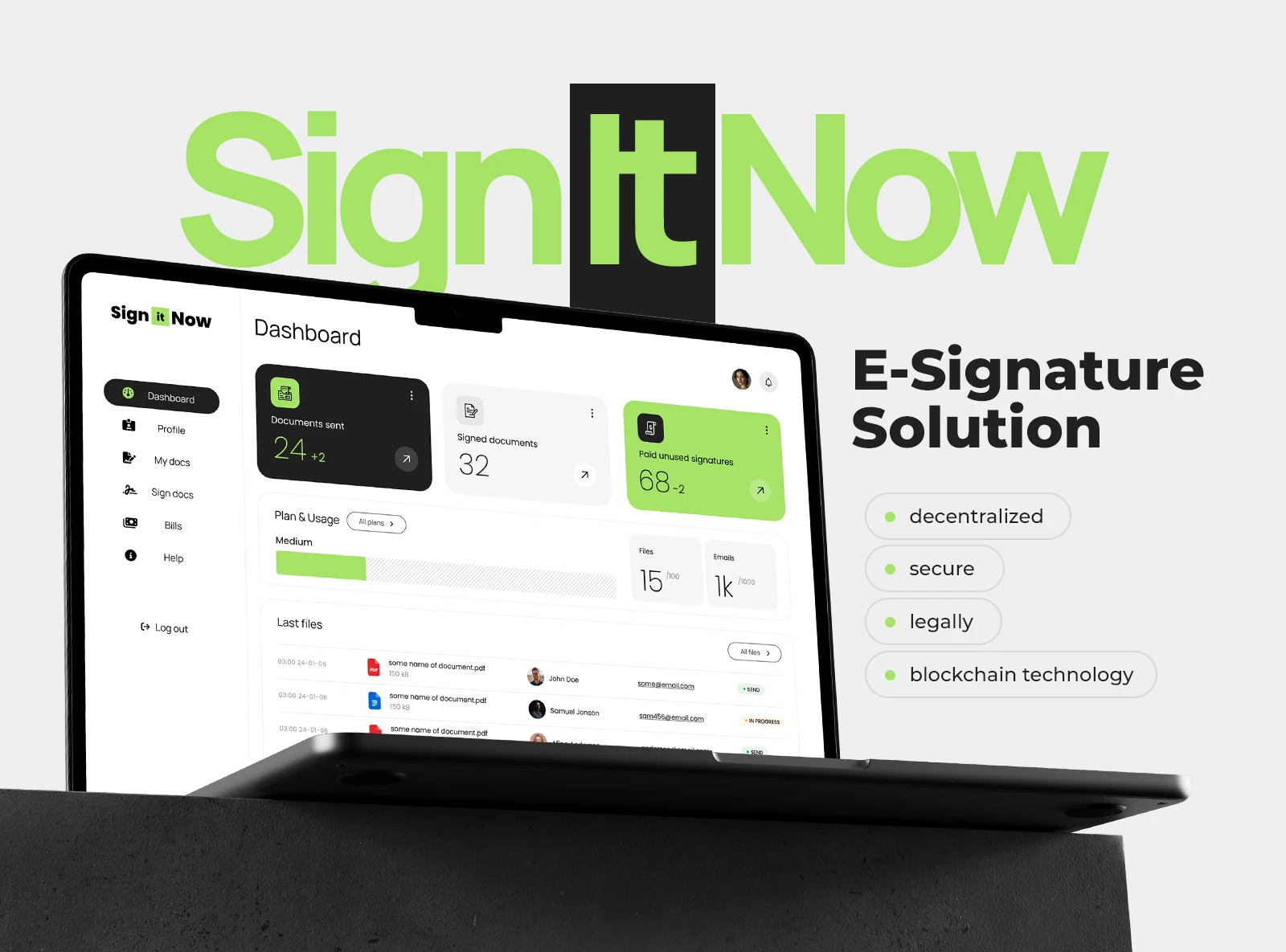
A light theme, the Manrope typeface, a single accent green on actions - everything else in shades of grey. The dashboard shows documents sent and signed, the balance of paid signatures and the usage of file and email quotas. The mobile version repeats the whole path: upload, assign signatories, place the fields, sign.
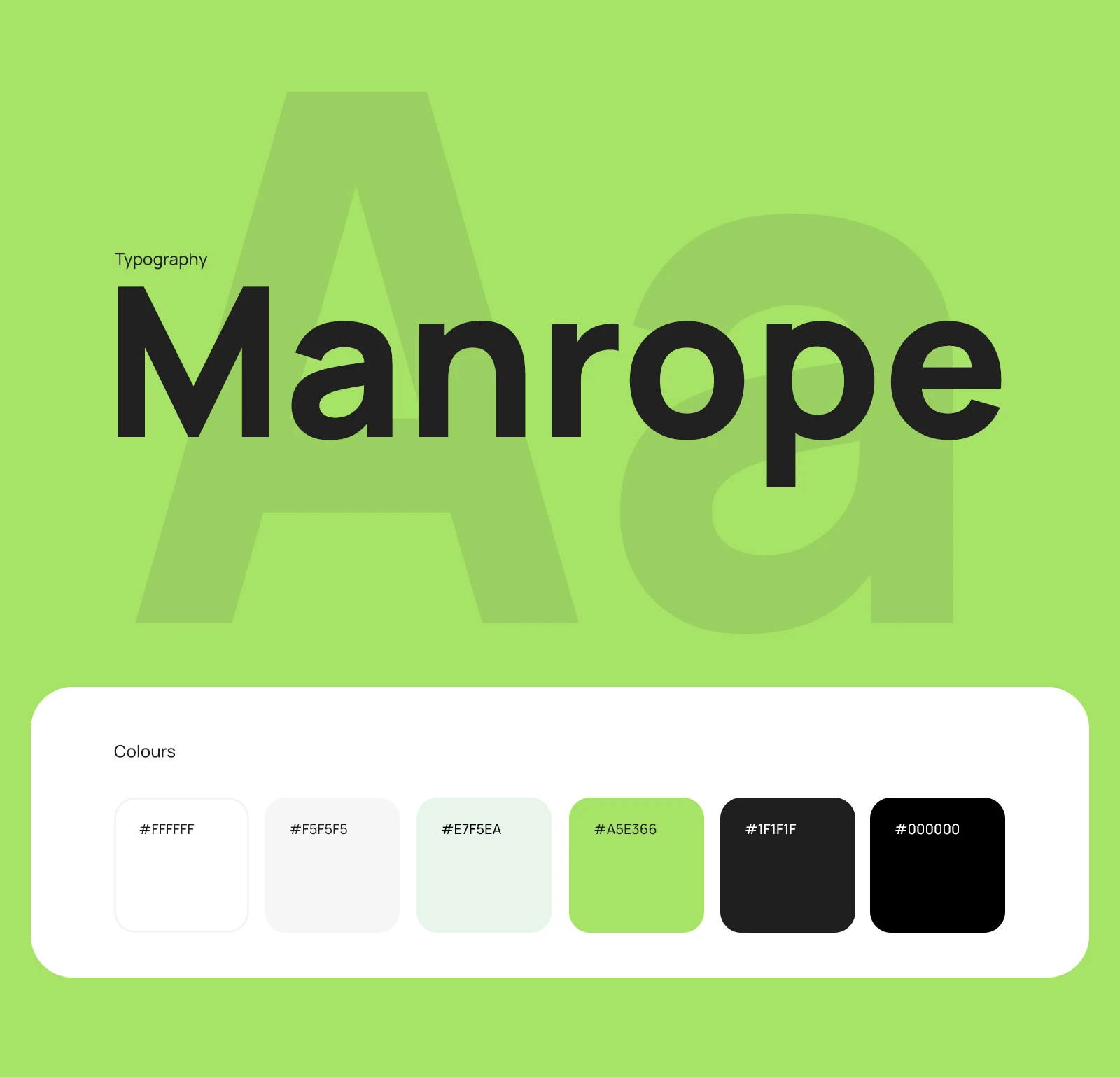
Typography and colour: the Manrope typeface and the brand palette
Scale and performance
The architecture is modular: new things are added as separate parts without touching what already works. Interaction with the blockchain is optimised so that not every user action has to be paid for, while smart contracts automate the verification and storage of documents.
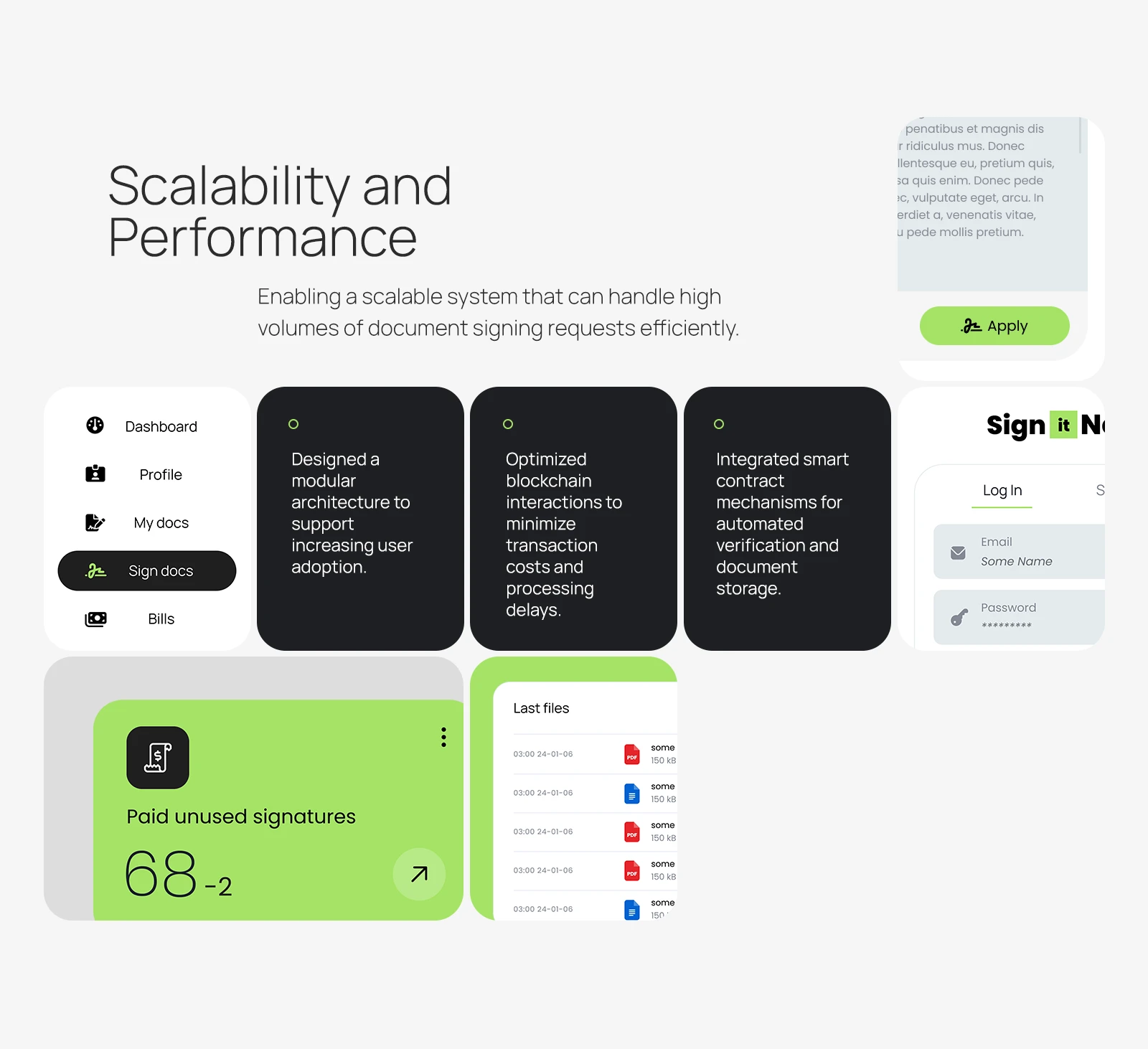
Scalability and performance of the electronic signature service 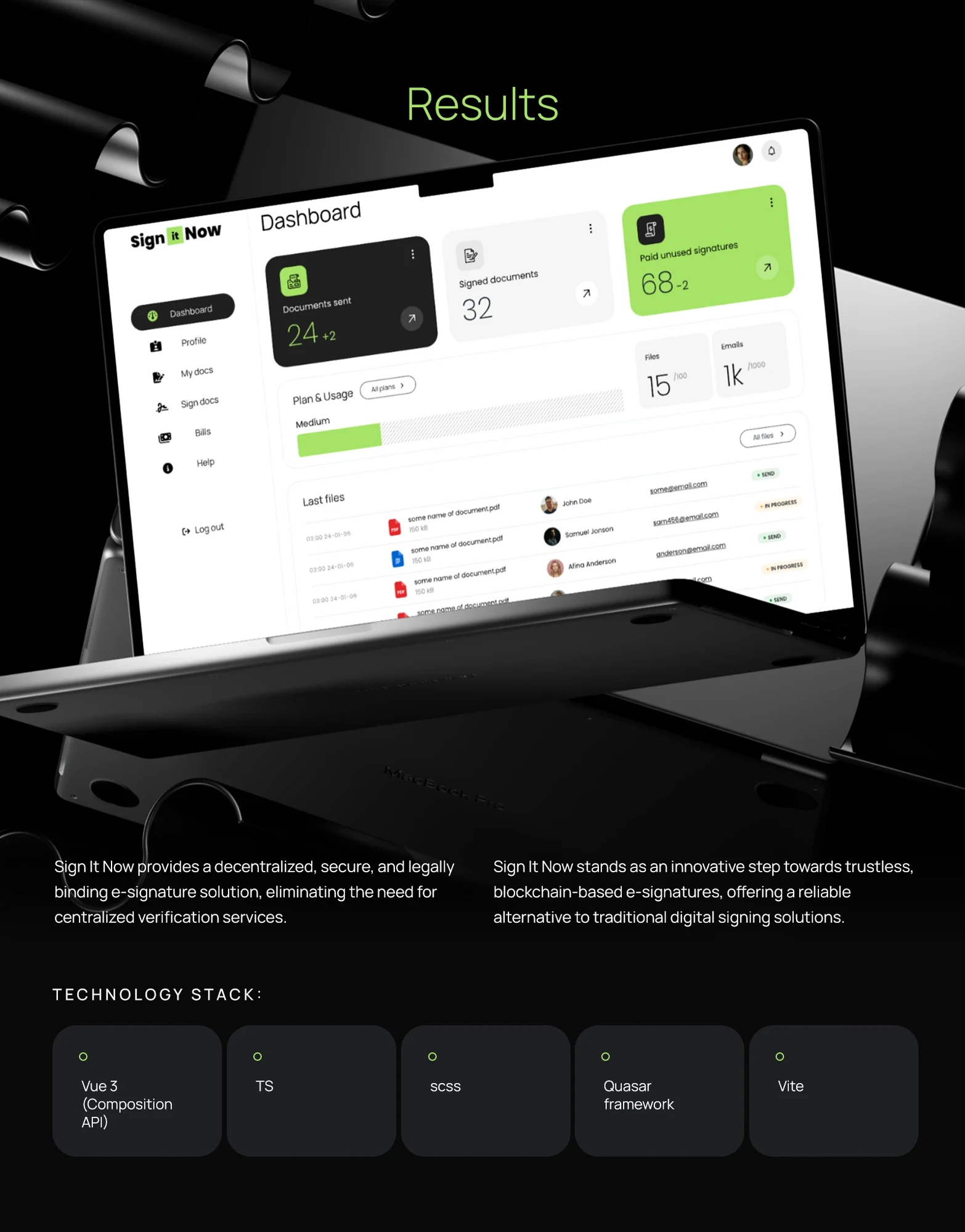
The result: a decentralised and legally binding solution for electronic signatures
Results
The figures came from carrying over solutions already proven in notarisation: entry by temporary link instead of a password, which doubles as the registration.
2x
simpler registration process
65%
growth in the number of users
Certificate of a signed document, the mobile version and the figures of the service 
Thank you for viewing the FAMOUS.TEAM case on e-signature platform development for SignItNow
SignItNow e-signature platform stack
What the project is made of
The agency services it took to launch it.
- ServiceMVP developmentMVP development is a working version of a product built small, made for one purpose: to test demand on real people rather than in a presentation. Finding out in a few weeks that...
- ServiceWeb3 and blockchainDevelopment of Web3 solutions that people trust with their money: smart contracts, wallets, trading and staking platforms, decentralised applications.
- ServiceFrontendFrontend development and markup to order: we build an interface that holds up equally on a phone and on a wide monitor, opens fast and stays readable on real data. We take the p...
- ServiceBackendBackend and API development: a server side that holds the load, keeps the data and updates without stopping the service. We take the project as a separate stage or place a devel...
- ServiceDesignWebsite and interface design by a team with experience both in design and in production frontend for products like these. So what is drawn gets built without surprises, whoever...
- ServiceOn-Line servicesCustomer portal and online service development for products people use regularly. We answer for the technical side and for giving the business clear figures: where a person stop...
- ServiceOutstaffStaff augmentation for your development team: the person works by your rules, inside your process and under your management. We answer for their qualification, the paperwork and...
- ServiceWeb developmentWebsite and web application development end to end: from the first conversation about the task to launch and support. We build things that live in the browser and have to withst...
- ServiceAnalyticsDashboard and monitoring system development: we collect data from different systems into one picture and show what decisions are actually made on.
- ServiceWeb3 experienceOur blockchain experience came both from individual commissions and from an ecosystem we ran for years together with its owners and their team. This page is about what we unders...
- ServiceBusiness consultingBusiness consulting answers the question of whether to do it at all and, if so, in what order. We review processes, the product and the figures, work out where you are losing mo...